As children progress through their educational journey, they are introduced to various concepts that help them develop critical thinking and problem-solving skills. One such concept is analogy, which plays a significant role in enhancing their cognitive abilities. Analogies are statements that compare two different things to show their similarities, often used to explain complex ideas in a simpler manner. For grade 3 students, understanding analogies is crucial as it helps them develop their reasoning and logical thinking skills.
Grade 3 students are at a stage where they are learning to make connections between different ideas and concepts. Analogies help them understand relationships between words, objects, and events, which is essential for their overall cognitive development. By practicing analogies, students can improve their ability to think critically and make informed decisions. Moreover, analogy practice helps students develop their language skills, as they learn to understand and use vocabulary in context.
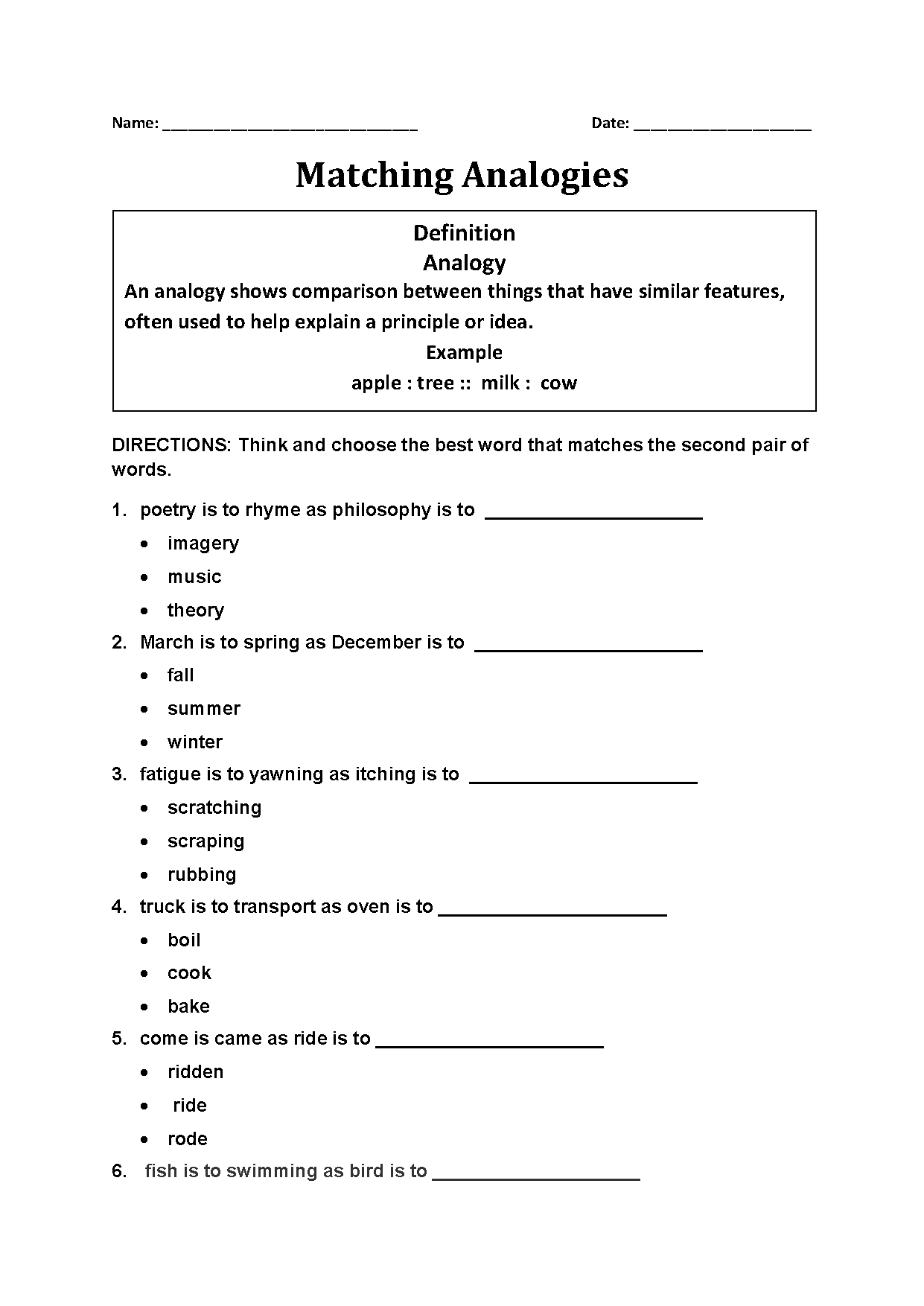
Matching Analogies Match Word Pairs In Analogical Context
What is an Analogy?
An analogy is a statement that compares two different things to show their similarities. It typically follows a specific pattern, such as ‘A is to B as C is to D’. For example, ‘A cat is to a kitten as a dog is to a puppy’. Analogies can be used to explain complex ideas, make predictions, and identify patterns. By understanding analogies, grade 3 students can improve their critical thinking skills and develop a deeper understanding of the world around them.
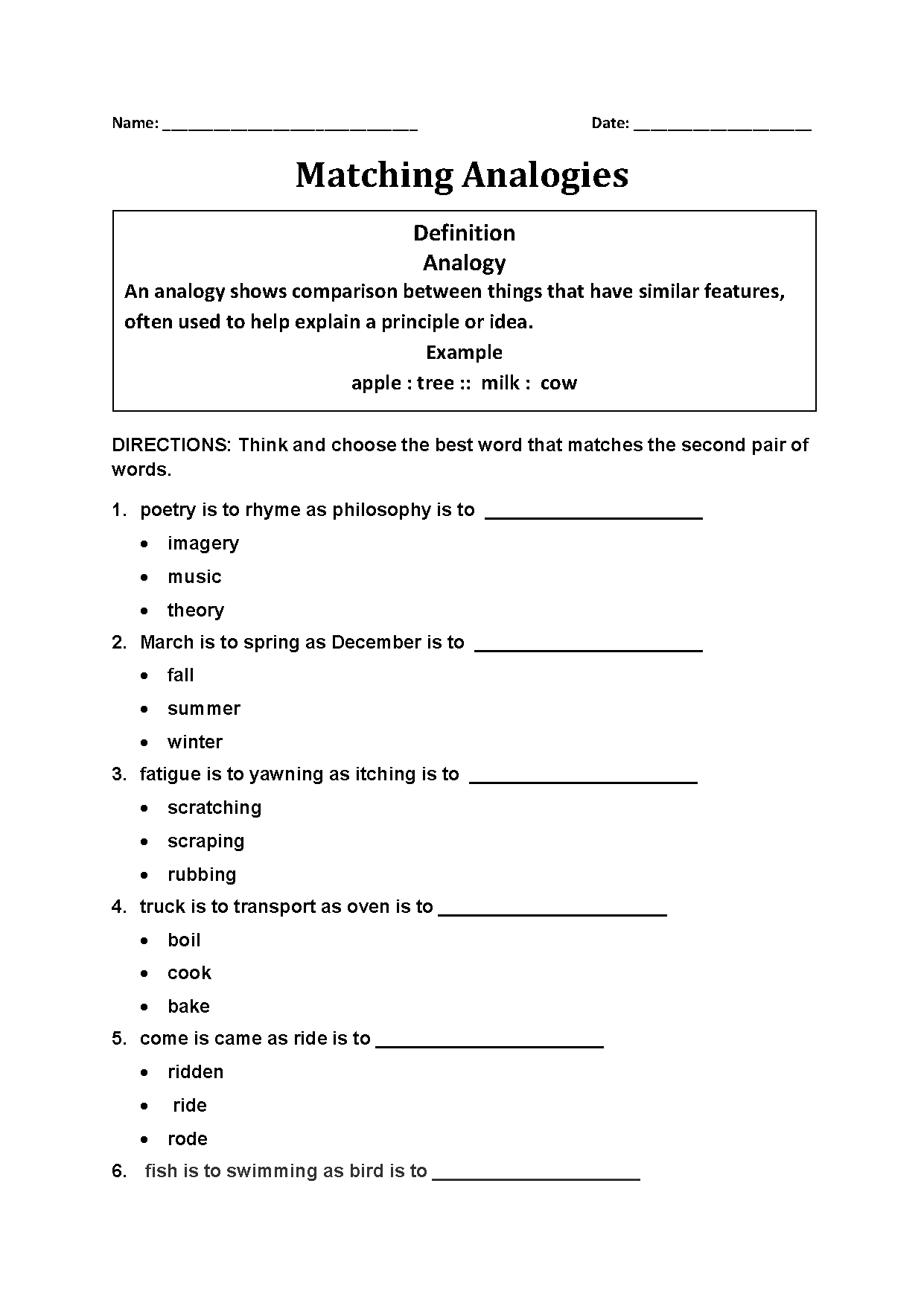
Matching Analogies Match Word Pairs In Analogical Context
Benefits of Analogy Practice for Grade 3 Students
The benefits of analogy practice for grade 3 students are numerous. By practicing analogies, students can improve their critical thinking skills, develop their problem-solving abilities, and enhance their language skills. Analogies also help students develop their spatial reasoning and visual processing skills, as they learn to identify patterns and relationships between objects. Furthermore, analogy practice can help students build their confidence and develop a growth mindset, as they learn to approach challenges and puzzles in a logical and methodical manner.
How to Use the Analogy Practice Worksheet Printable
To get the most out of the analogy practice worksheet printable, parents and teachers should follow a few simple steps. First, introduce the concept of analogy to the student and explain its importance in critical thinking and problem-solving. Next, provide the student with the printable worksheet and have them complete the exercises on their own. Finally, review the answers with the student and provide feedback on their performance. By following these steps, parents and teachers can help grade 3 students develop their critical thinking skills and improve their overall cognitive abilities.
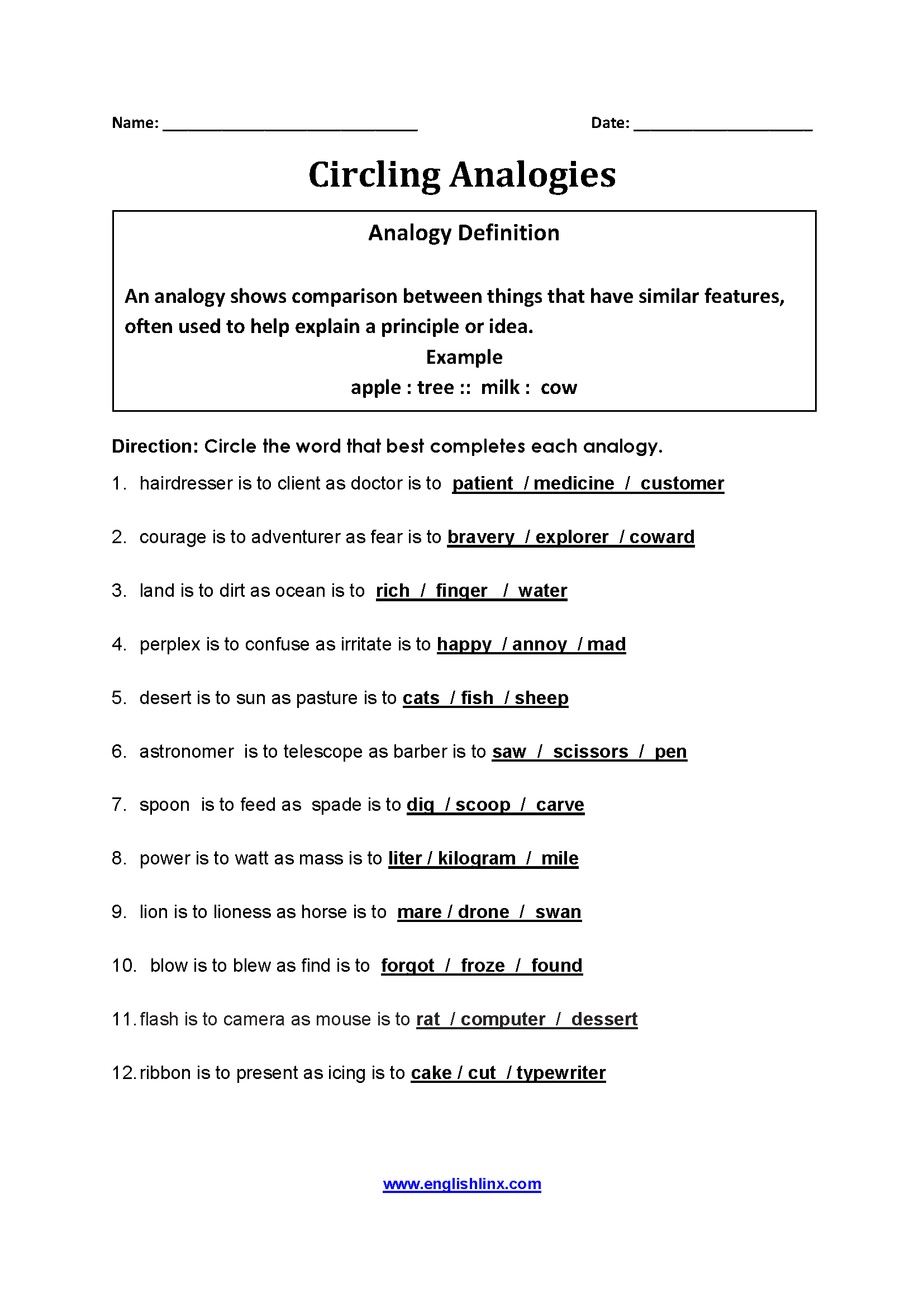
Circling Analogies Word Relationship Worksheet Practice
In conclusion, analogy practice worksheets are a valuable resource for grade 3 students looking to improve their critical thinking and problem-solving skills. By downloading and printing our analogy practice worksheet, parents and teachers can provide their students with a fun and engaging way to develop their cognitive abilities. With regular practice, grade 3 students can improve their ability to think critically, make informed decisions, and approach challenges with confidence. So why wait? Download our analogy practice worksheet printable today and help your child develop the skills they need to succeed in school and beyond!
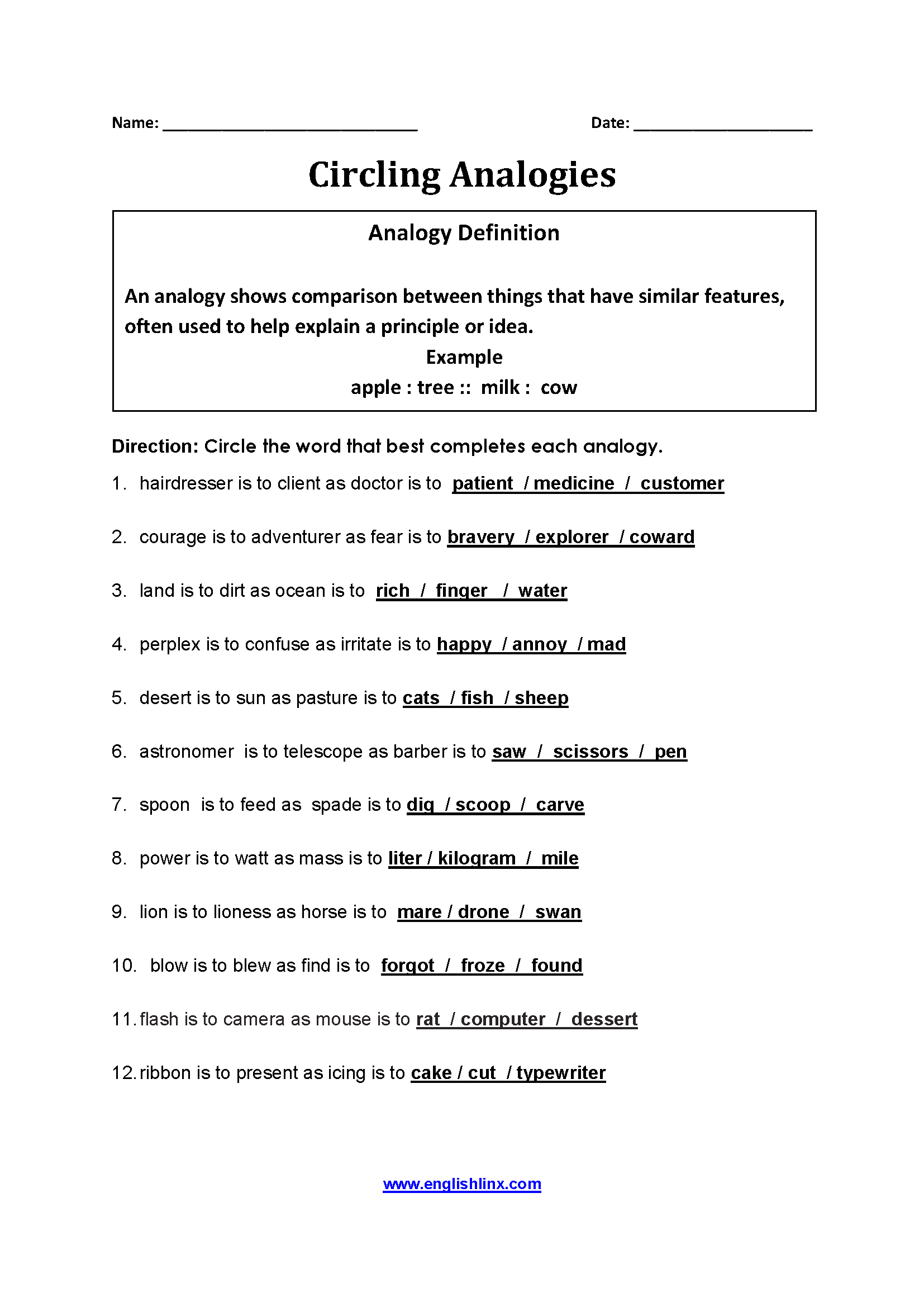
Circling Analogies Word Relationship Worksheet Practice
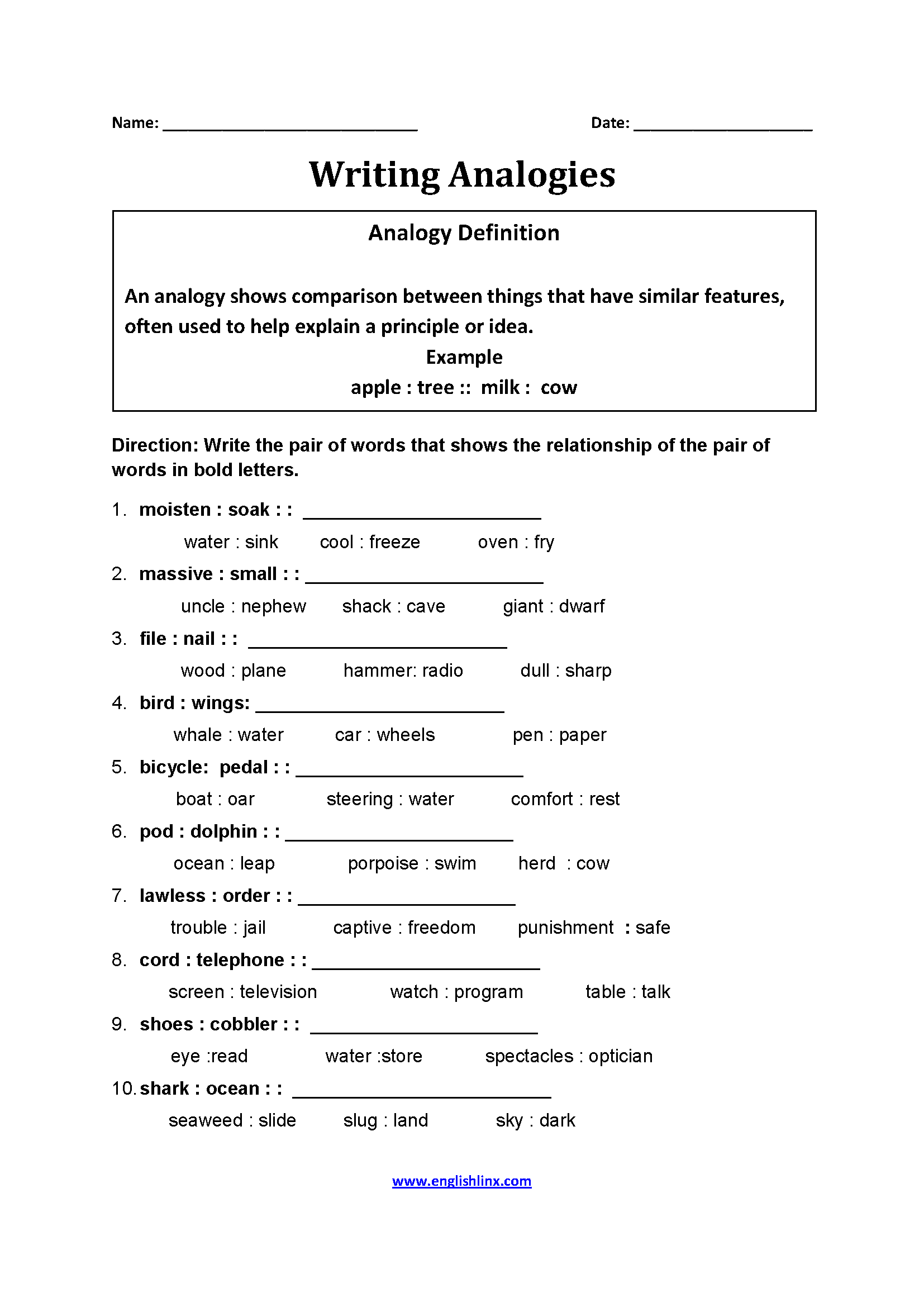
Writing Analogies Create Your Own Word Analogies