Learning about sentence structures is a fundamental part of language education. It involves understanding the differences between various types of sentences, including affirmative and interrogative sentences. Affirmative sentences are statements that convey information or facts, while interrogative sentences are used to ask questions. The ability to distinguish between these two and to convert one into the other is a crucial skill for effective communication.
Mastering the conversion of affirmative sentences into interrogative ones not only improves writing and speaking skills but also enhances critical thinking and comprehension. It requires a deep understanding of grammar rules, including the use of question words, changes in word order, and the appropriate use of punctuation. For learners, especially students, practicing with worksheets is an engaging and efficient way to grasp these concepts.
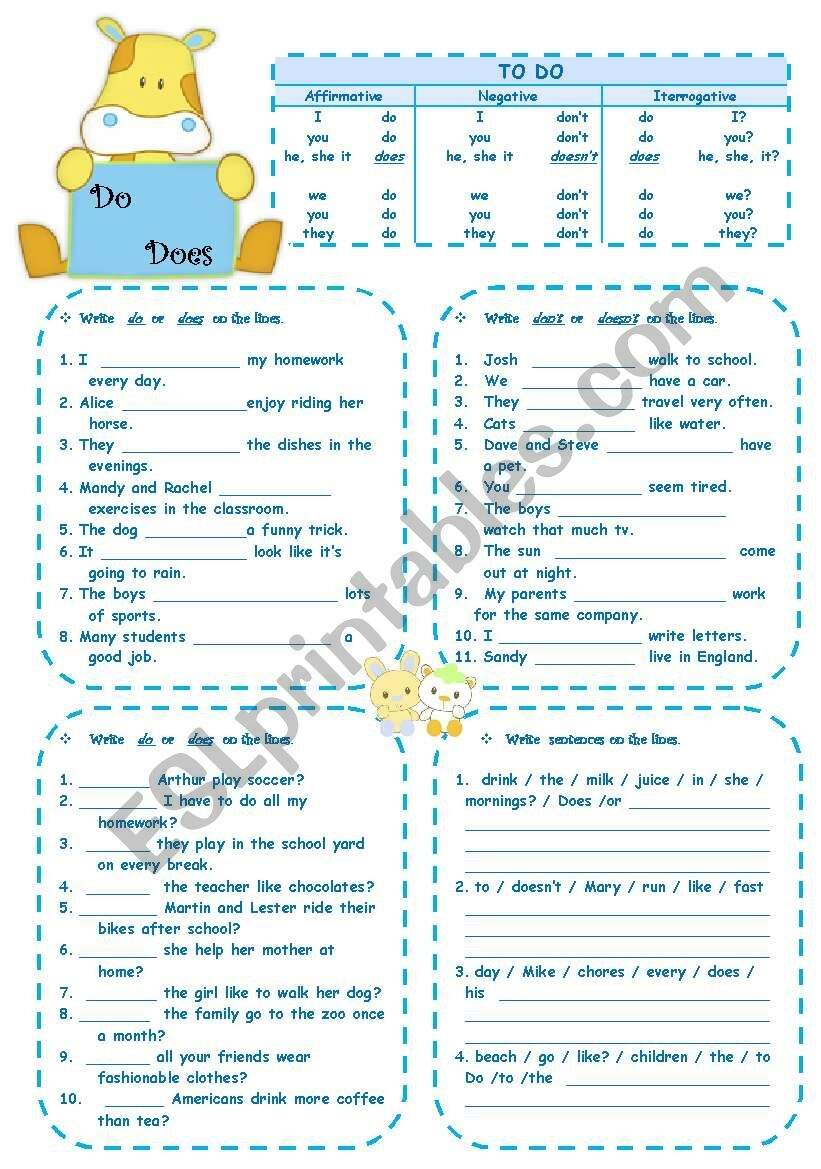
DO And Does Affirmative Negative Interrogative ESL Worksheet By Blizzard1
Understanding the Basics of Affirmative and Interrogative Sentences
Understanding the basics of affirmative and interrogative sentences is the first step in mastering their conversion. Affirmative sentences typically follow a subject-verb-object (SVO) word order, while interrogative sentences often start with a question word or an auxiliary verb, followed by the subject and then the verb. Recognizing these patterns and practicing their application is key to becoming proficient in transforming statements into questions.
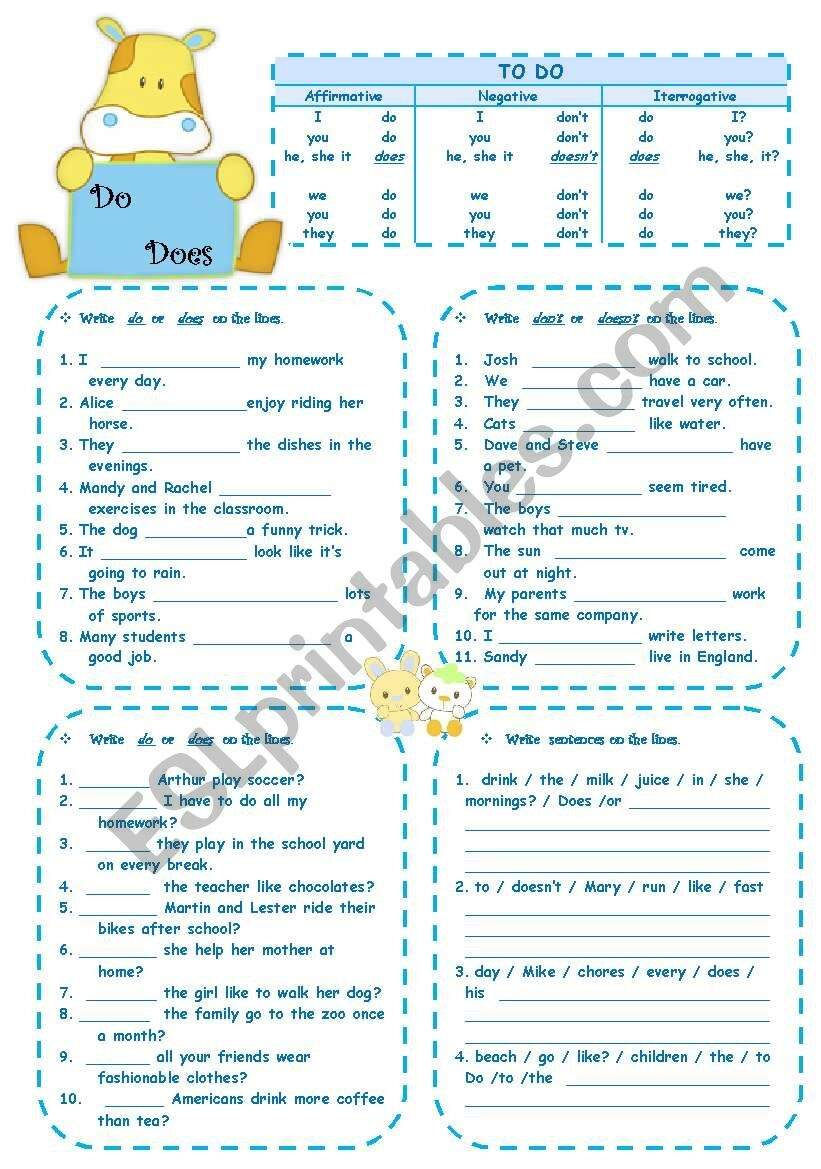
DO And Does Affirmative Negative Interrogative ESL Worksheet By Blizzard1
The Importance of Practicing with Printable Worksheets
The importance of practicing with printable worksheets cannot be overstated. These resources provide a structured and interactive approach to learning, allowing students to apply their knowledge in a practical way. By converting affirmative sentences into interrogative ones, learners can reinforce their understanding of grammatical rules and develop their analytical skills. Furthermore, worksheets can be tailored to different levels of difficulty, making them suitable for a wide range of learners.
Tips for Effectively Using Interrogative Worksheets
For educators and learners looking to make the most out of interrogative worksheets, several tips can enhance the learning experience. Firstly, it’s essential to start with simple exercises and gradually move on to more complex sentences. This progression helps build confidence and ensures a solid foundation in the basics. Secondly, combining worksheet activities with real-life scenarios can make the practice more relatable and interesting. Lastly, providing feedback and encouraging self-correction are vital for reinforcing learning outcomes.
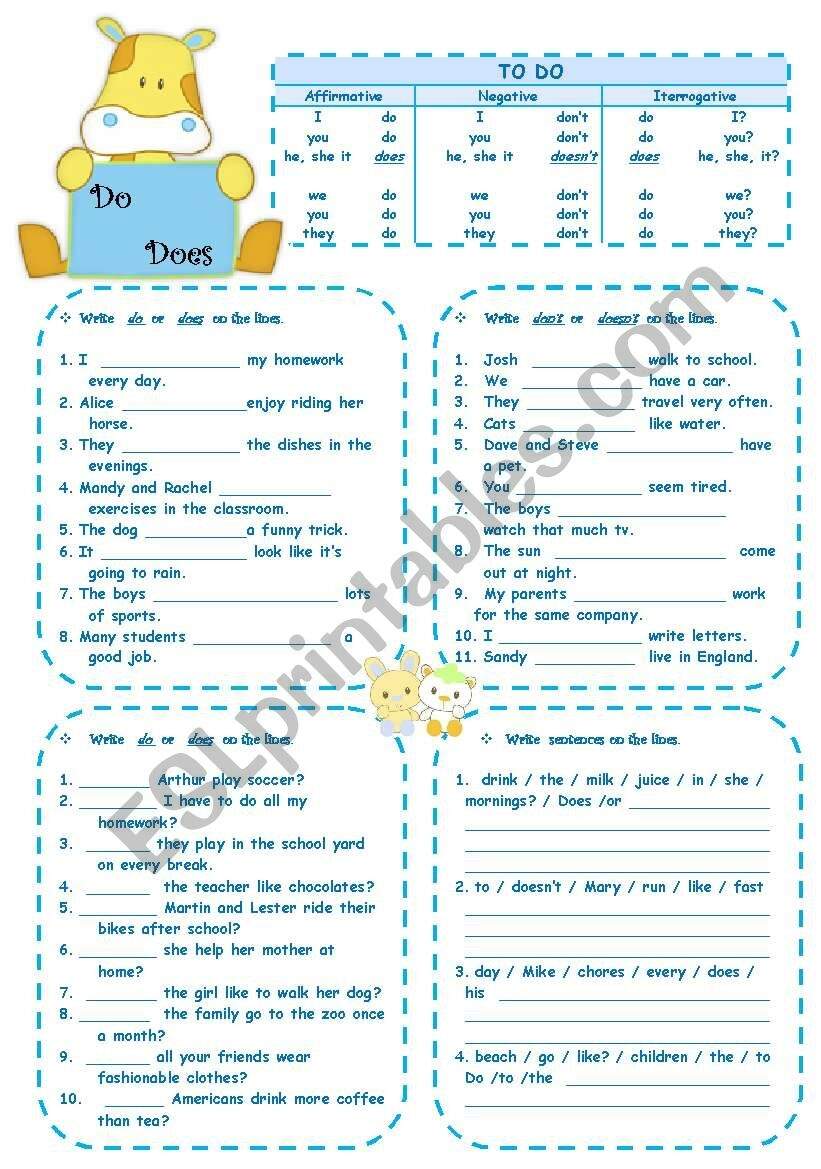
DO And Does Affirmative Negative Interrogative ESL Worksheet By Blizzard1
In conclusion, transforming affirmative sentences into interrogative ones is a valuable skill that contributes to a deeper understanding of language structures and improves communication skills. With the aid of printable worksheets, learners can engage in a hands-on and effective learning process. Whether you’re a student looking to improve your grammar skills or an educator seeking to enhance your teaching resources, exploring and utilizing these worksheets can be a rewarding and educational experience.
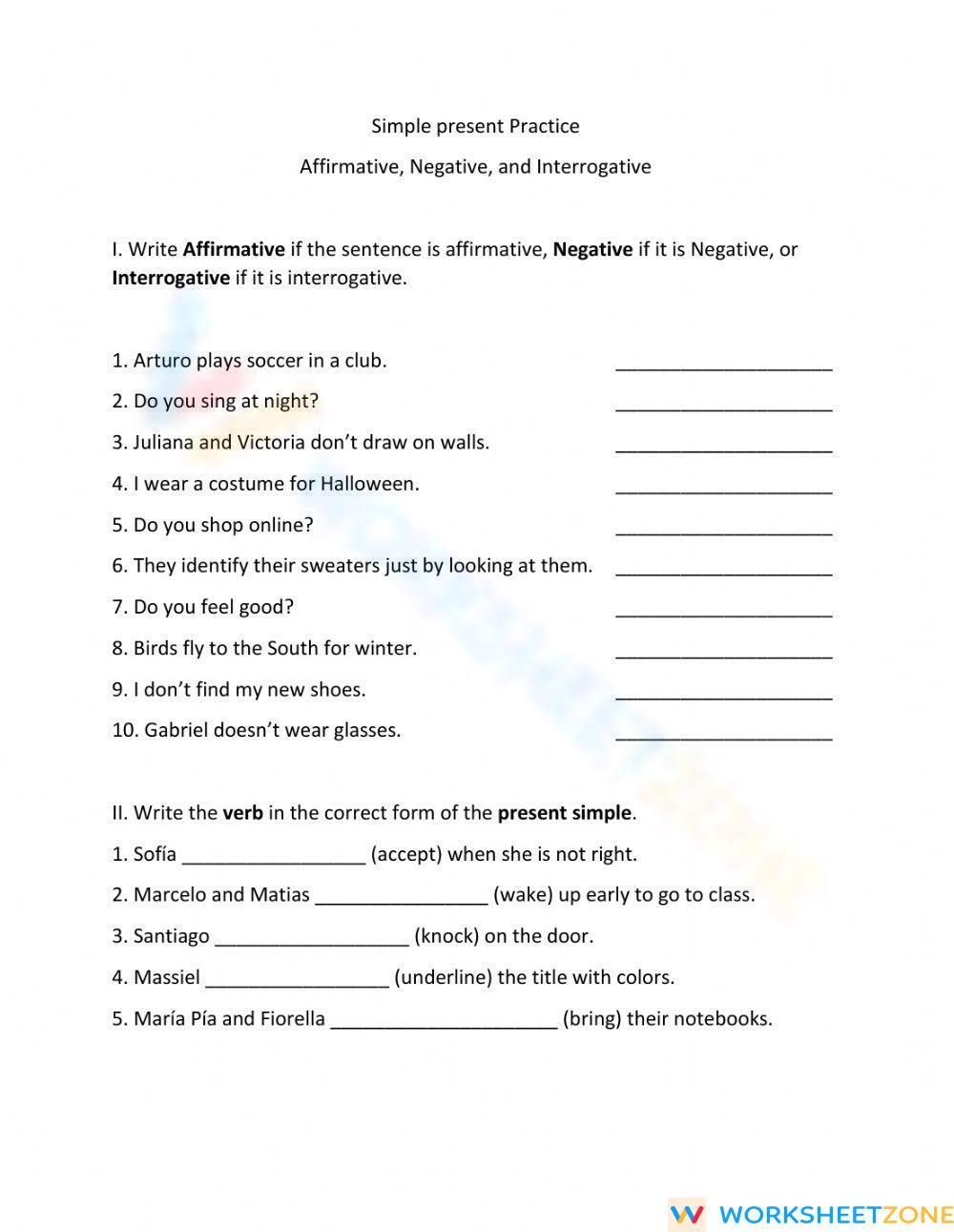
Present Simple Affirmative Negative Interrogative Worksheet
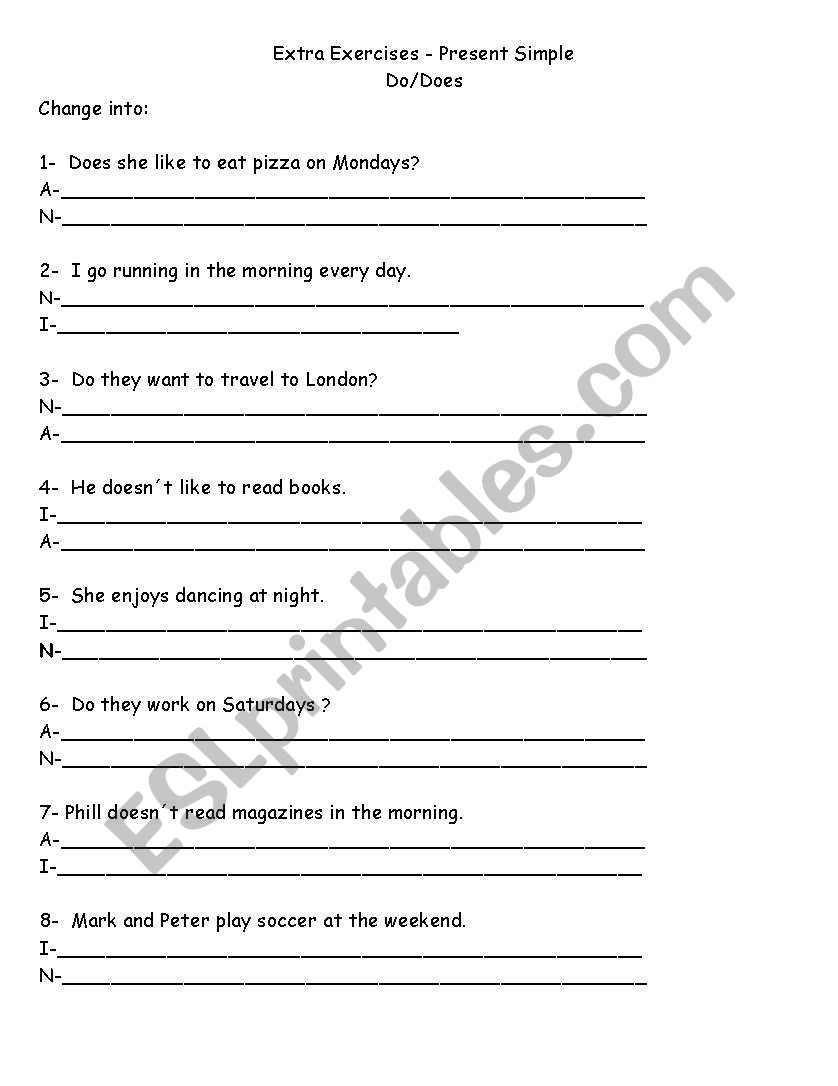
Make Negative Interrogative Or Affirmative Sentences With DO And DOES ESL Worksheet By Teachervanvan